Small Bathroom Remodel Ideas That Make a Measurable Difference
KEY TAKEAWAYS
- A small bathroom feels bigger when you change the layout first – relocating a door swing, shifting a vanity, or trading a tub for a shower reclaims square footage that paint and tile never will.
- Right-sizing fixtures matters more in a small bath than any other room: a 30-inch vanity, a wall-hung toilet, and a curbless shower can free up six to ten inches of usable floor in a single change.
- Large porcelain panels eliminate grout lines on walls and counters, which makes a small bathroom easier to clean and visually calmer because the eye isn't broken up by repeating tile seams.
- Storage built into the wall – recessed niches, medicine cabinets set flush, vanity drawers instead of doors – keeps the floor clear, which is what actually makes a small room read as larger.
A small bathroom remodel is the work of improving how a tight bathroom functions and feels without adding square footage, usually a space between 35 and 50 square feet. The goal isn't to make the room look bigger in a photo. It's to make it work better every morning – more storage, easier cleaning, a shower you can actually move in. If you're weighing small bathroom renovations in Marin or Sonoma, the difference between a frustrating result and a good one almost always comes down to decisions made before a single tile goes up.
Most "small bathroom ideas" articles are photo galleries. This one explains why specific choices work in a small footprint, with the dimensions and materials that hold up in the older homes common across Novato, San Rafael, Petaluma, and Santa Rosa. We've been opening up walls in these houses for over 40 years, and a lot of what makes a small bath frustrating is hidden behind them – old galvanized supply lines, undersized framing, a window placed where you'd want a shelf. Naming those constraints early is how you avoid surprises later.
Layout Changes That Reclaim Space You Already Have
The single biggest gain in a small bathroom usually comes from moving something, not adding something. Before you pick tile, look at how the room is used and where the wasted space hides.
Start with the door. A standard door swinging into a 40-square-foot bathroom eats a four-foot arc of floor that can't hold anything else. A pocket door recovers that entire arc. In older Marin homes the wall often has room for the pocket once we open it up, though we check for plumbing and wiring in that wall first – sometimes there's a vent stack you can't move cheaply.
Next, look at the tub. A standard alcove tub takes about 15 square feet and, in most small baths, gets used as a shower anyway. Converting it to a walk-in shower in the same footprint opens the room up visually and physically. A tub-to-shower conversion can be done in as little as one to two days when the plumbing stays in place, which is one of the lowest-disruption changes you can make.
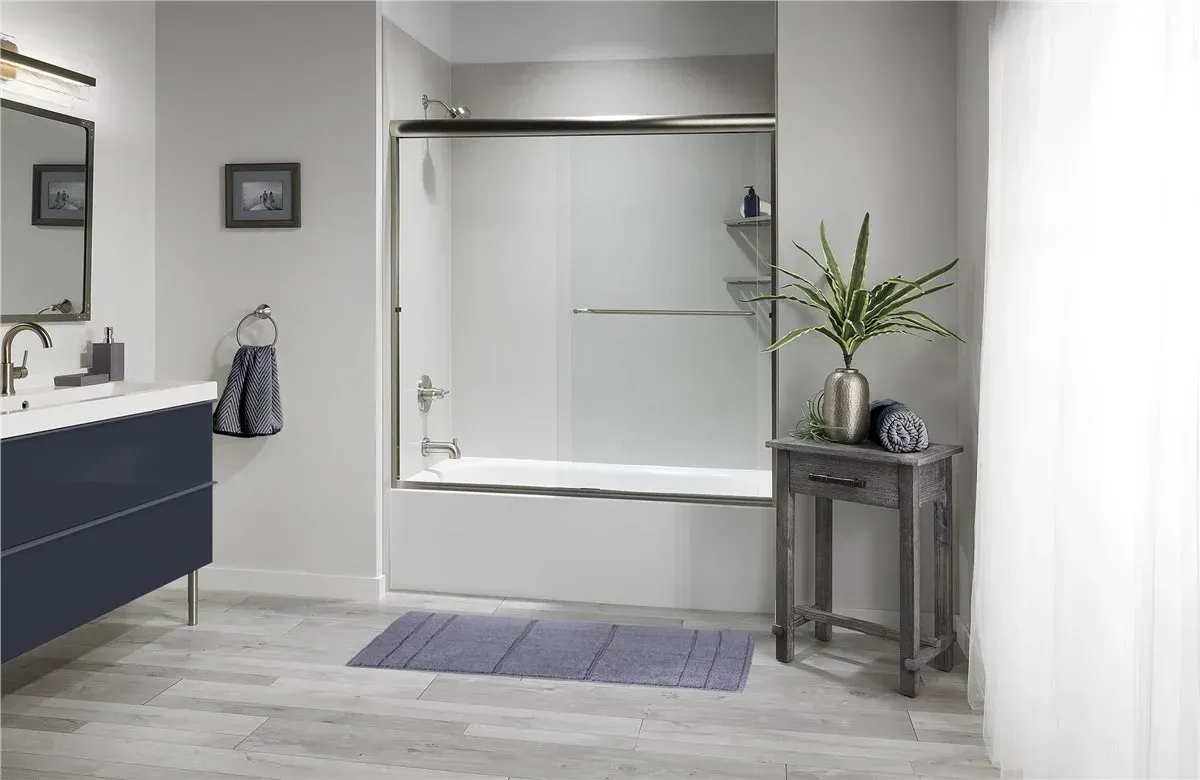
Finally, consider whether the vanity and toilet are fighting for the same wall. Shifting the toilet six inches or moving the vanity to a different wall can open a clear sightline from the door, and a clear sightline is most of what makes a small room feel less cramped. These moves require relocating plumbing, so they belong in the planning stage where the cost is known up front, not discovered mid-demolition.
Fixture Sizing for Small Baths: What Actually Fits
The right fixture in a small bathroom is the one that does its job in the least floor space, and the numbers matter more here than anywhere else in the house. A few inches changes how the whole room feels.
For the vanity, a 30-inch unit gives you a real countertop and storage while leaving walking room. Going to 24 inches is fine in a powder room but tight where someone actually gets ready. Wall-hung vanities add another trick: the open floor underneath reads as more space, and it makes the floor easier to clean.
The toilet is the quiet space-eater. A standard tank toilet projects 28 to 30 inches from the wall. A wall-hung toilet with an in-wall tank can save up to ten inches of projection, which in a small bath is the difference between bumping the vanity and walking past it freely. Wall-hung units cost more and require the right framing, so it's a decision to make on purpose, not as an upgrade tacked on at the end.
For the shower, a curbless entry does two things at once. It removes the visual line of a curb that chops the floor into pieces, and it removes the trip hazard that becomes a real concern as homeowners age in place. A curbless shower needs the floor sloped correctly and the waterproofing detailed right, which is exactly the kind of behind-the-scenes work that separates a shower that stays dry from one that leaks in three years.
Tile and Color Strategies That Make a Small Room Read Larger
Color and surface choices won't add square footage, but they change how the eye reads the room – and in a small bath, that's worth getting right. The principle is simple: fewer visual interruptions make a room feel bigger.
This is where large porcelain panels earn their place. Instead of dozens of tiles with grout lines crisscrossing the walls, a panel covers a shower surround or wall in one continuous surface. The TruBath porcelain panels we install give you the look of stone with the durability of porcelain, and because there are almost no grout lines, there's almost nothing to scrub. In a small bathroom, that uninterrupted surface keeps the eye moving instead of stopping at every seam, so the walls feel like they recede.
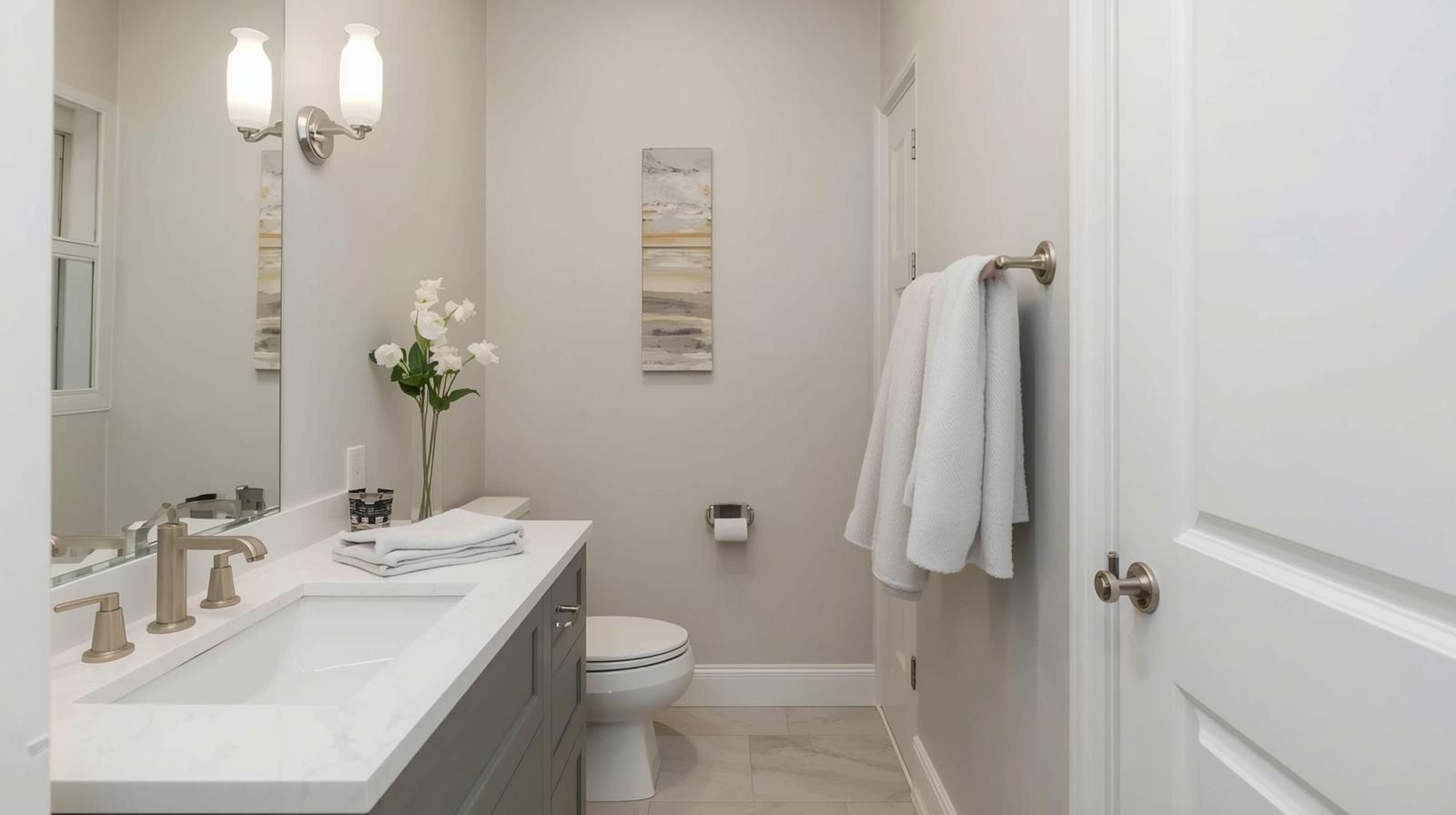
Color follows the same logic. Lighter, consistent tones on walls and floor blur the line where they meet, which makes the boundaries of the room less obvious. That doesn't mean everything has to be white. A consistent mid-tone reads as larger than a busy mix of contrasting colors and patterns competing for attention in a tight space.
DESIGN BUILD INSIGHT
In a bathroom under 50 square feet, grout lines do more visual damage than most homeowners expect. Every seam is a line your eye stops on, and dozens of them in a small room make the walls feel closer. Large porcelain panels remove that visual noise and the cleaning that comes with it – one wipe instead of scrubbing grout. It's one of the few choices that improves how a small bath looks and how it functions at the same time.
One caution: glossy finishes bounce light, which helps, but they also show every water spot. In a hardworking family bath, a finish with a slight texture often holds up better day to day. The right answer depends on who uses the room and how often.
Storage Built Into the Design, Not Bolted On Later
The most useful storage in a small bathroom lives inside the walls, not on top of the floor, because anything on the floor makes the room feel smaller. Plan storage during design and it disappears into the architecture.
Recessed niches in the shower wall hold shampoo and soap without a single bracket hanging off the tile. They cost almost nothing to add while the wall is open, and they're nearly impossible to add cleanly after the fact – which is why this is a planning decision. The same goes for a medicine cabinet set flush into the wall cavity rather than projecting off the surface; it gives you storage that doesn't intrude on the room.
In the vanity, drawers beat doors in a small bath. Drawers use the full depth of the cabinet and let you see everything at once, while a door-and-shelf setup wastes the back third of the cabinet to things you forget you own. A single vanity swapped from doors to drawers often doubles the usable storage in the same footprint.
If you want more practical ways to get function out of a tight budget and a tight floor plan, our guide to affordable bathroom remodel ideas in Sonoma walks through choices that improve daily use without overspending.
When a Small Bath Needs a Full Gut Instead of a Refresh
Sometimes the honest answer is that a cosmetic update won't get you where you want to go, and it's better to hear that before you spend money halfway. A small bath needs a full gut when the problems are behind the walls, not on them.
Here's the plain version. If the layout doesn't work, if there's water damage, if the plumbing is old galvanized pipe, or if you want to move fixtures, you're into a full remodel whether you planned for it or not. In homes built before the 1970s across Marin and Sonoma – and there are a lot of them – we routinely open a wall for a "simple" update and find rot, undersized framing, or wiring that has to be brought up to code. Forty years of opening these walls means we can usually predict what's back there before we start, which is the point of inspecting carefully during planning.
A minor or cosmetic bathroom remodel generally runs $18,000 to $30,000. A primary or higher-end remodel runs $55,000 to $100,000 or more. The spread is wide because what's behind the walls and how much you move drives the number far more than the tile you pick. That's exactly why we put the budget in writing before anyone swings a hammer.
This is where the Design Build Clarity Plan™ does its work. It's a paid service you schedule before committing to construction, and it gives you 3D renderings of both your existing bathroom and the proposed remodel, a locked-in budget, a detailed timeline, and a materials plan. No construction starts until you've reviewed and approved all of it. Because we handle design and construction under one roof, you're not coordinating between a designer and a separate builder who blame each other when something doesn't line up – one team owns the whole job.
Why Deciding Now Beats Waiting Another Year
A small bathroom that doesn't work doesn't get better on its own. The galvanized pipe keeps corroding, the grout keeps staining, and the layout keeps annoying you every morning. Waiting doesn't lower the cost of fixing it – older systems usually cost more to address the longer they sit.
The practical move is to get clarity on the real scope and the real number before you commit. For many small baths, that means a tub-to-shower conversion finished in a day or two; for others, it means a full remodel where knowing what's behind the wall up front saves you from mid-project surprises. Either way, you decide with the budget, the timeline, and the 3D plan in hand.
Schedule a Clarity Plan™ with Design Build Specialists and Request Consultation to get a clear scope, a locked-in budget, and a 3D walkthrough of your small bathroom before any work begins.
Frequently Asked Questions
What is a reasonable budget for a small bathroom remodel?
A well-planned small bathroom remodel in Marin and Sonoma typically ranges based on the scope of work – surface-level updates cost less, while full gut renovations involving plumbing relocation, custom tile, and new fixtures sit at a higher tier. The most important factor isn't the number itself, but whether the budget is allocated intelligently: prioritize layout, waterproofing, and durable materials first, then finishes. A clear scope defined upfront protects you from the cost creep that derails most remodels.
What is the most expensive part of a bathroom remodel?
Labor – particularly skilled tile work, plumbing rough-in, and waterproofing – consistently represents the largest share of a bathroom remodel budget. Tile installation in a small bathroom is deceptively labor-intensive because precision matters more in tight spaces, and any error compounds quickly. Fixtures and vanities are visible, but the work behind the walls is where lasting value is built.
What should you avoid when renovating a bathroom?
The most common mistakes are choosing finishes before finalizing the layout, underestimating waterproofing, and treating storage as an afterthought. In small bathrooms especially, a poorly considered layout will frustrate you every single day regardless of how beautiful the tile is. Skipping a proper design phase to save time almost always costs more to correct later. The Design Build Clarity Plan™ exists to settle the layout, budget, and materials before any work begins, which is where these problems get caught.
Can you renovate a small bathroom for $10,000?
In Marin and Sonoma, $10,000 is a workable budget for a focused cosmetic renovation – new fixtures, updated vanity, fresh tile – if the plumbing and layout remain unchanged. The moment structural work, waterproofing replacement, or custom elements enter the scope, that number gets stretched thin. Knowing exactly what you want to change before budgeting is the only way to get an honest answer, and a tightly scoped project with disciplined design decisions is what makes a modest budget deliver a sharp, well-executed result.